
Run Run Deals: Coupons & Codes
RunRunDealsShopping
4.4184.00 Reviews
- Version
- 4.9.7
- Installs
- 10.00K
- Age Rating
- Everyone
Screenshots
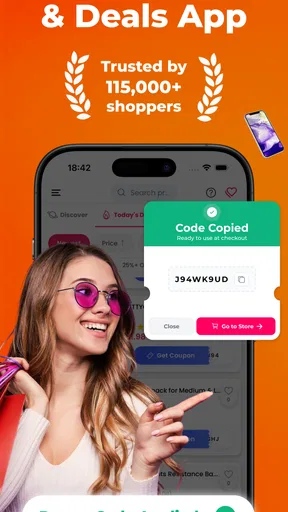
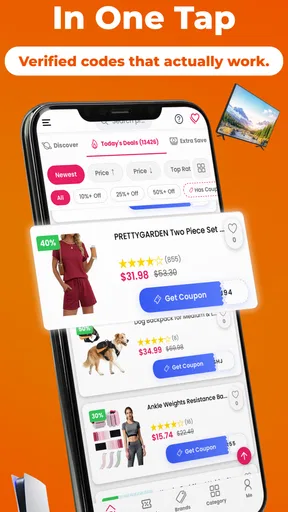
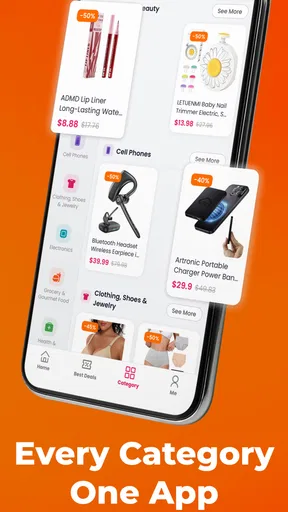
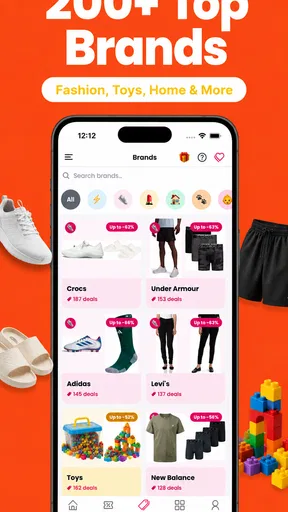
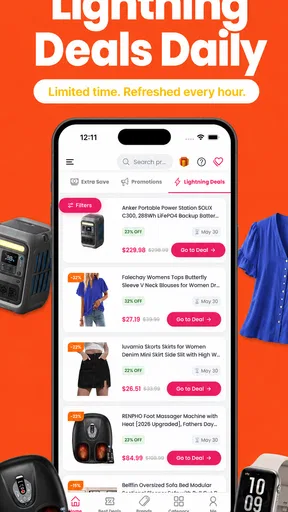
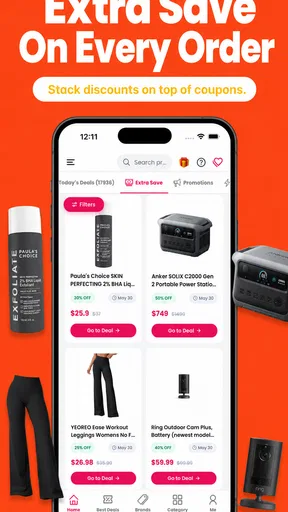
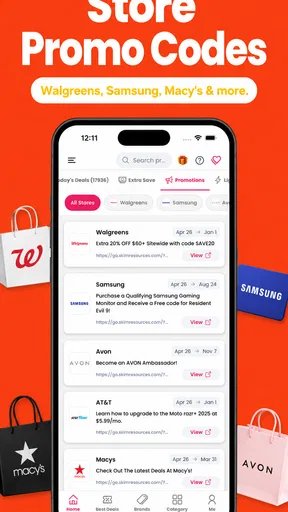

Our Review of Run Run Deals: Coupons & Codes
 Analysis by Appyee
I installed Run Run Deals: Coupons & Codes to see whether it makes everyday shopping easier for people who need a clear, low-effort way to find savings. It is a free shopping app from RunRunDeals, aimed at bringing verified coupon codes, promotional codes, and daily deals into one place. My overall impression is positive, but with an important qualification: it works best as a quick search-and-check companion, not as a complete replacement for a retailer’s own app or checkout page.
The app has a 4.4 average from around 480 ratings and more than 180 written reviews, while its install count has passed 10 thousand. Those figures suggest a modest but established user base rather than a huge shopping platform. It is rated for Everyone, supports devices running Android 7.0 or later, and the current version is 4.9.7. I would consider those details reassuring for people using an older Android phone, although the experience can still depend on the screen size, system text settings, and the individual store where a code is used.
How Run Run Deals feels to use in different situations
I find Run Run Deals most useful when I treat it as a deliberate checkpoint between deciding what to buy and paying for it. In the next section, I’ll focus on how that habit changes the experience across ordinary shopping situations, including when a quick deal check is helpful and when it is better to keep moving.
Readability and navigation during a quick search
The most useful way to approach this app is with a specific shopping task in mind. Instead of opening it casually and scrolling without a plan, I would start by thinking of the retailer or product category I am already considering. That makes the app’s purpose immediately understandable: look for a deal, inspect the code or offer, and then move to the seller’s checkout process when necessary.
That workflow matters for readability. Coupon apps can become tiring when every screen feels like a wall of promotions, especially for users who enlarge text, use a smaller display, or need more time to distinguish headings from supporting details. Run Run Deals is easier to judge when the user treats each offer as a short decision: is this store relevant, is the promotion suitable, and is the saving worth the effort of applying it?
I found that the app’s value is not simply the number of offers it presents. Its practical strength is reducing the need to search several coupon pages manually. A shopper who already knows the store can focus attention on the offer rather than remembering multiple browser tabs. That is a meaningful improvement for anyone who finds rapid switching, dense pages, or repeated typing difficult.
Still, I would not describe the navigation as completely effortless for every user. Coupon browsing naturally involves comparing conditions, checking whether an offer applies to a particular order, and moving between the deal page and the retailer. Those steps can be mentally demanding when the wording is long or when a promotion has several restrictions. The app helps with discovery, but it cannot remove the complexity created by the retailer’s own rules.
One practical habit makes the experience clearer: read the offer details before copying or trying to remember a code. I would check whether the saving appears to depend on a minimum order, selected products, a particular customer status, or another checkout condition. This small pause prevents a common frustration with coupon apps, where the code looks attractive but fails because the order does not match the terms.
Motor and sensory considerations
For people with limited dexterity, the app can be useful because the basic task is less demanding than searching the wider web for a working promotion. A focused coupon screen may require fewer repeated searches, fewer long addresses to type, and less hunting through unrelated results. I especially see value for someone shopping on a phone with one hand while travelling, waiting in a queue, or managing another task.
However, the final part of the process usually moves beyond the app. Applying a code may mean copying it, changing applications, selecting a retailer’s cart, and entering the code in the correct field. That sequence can be awkward for users who have tremors, reduced precision, or difficulty performing quick transitions. Run Run Deals can shorten the discovery stage, but it does not control the design of the checkout page where the code must ultimately work.
Sensory needs also deserve a realistic assessment. I would not assume that every offer is equally easy to scan, because shopping promotions often place important conditions near less prominent text. Users who rely on enlarged text, strong contrast, screen magnification, or spoken feedback should test whether the current layout works comfortably on their own device. The app is rated for Everyone, but that age classification is not the same as an accessibility certification.
There is a useful distinction between visual simplicity and genuine accessibility. A page can look uncluttered while still requiring precise taps or careful reading. Conversely, a user with good visual recognition but limited hand movement may prefer a short offer page and then complete the purchase on a larger device. In my view, Run Run Deals is most helpful when it is one part of a flexible shopping setup rather than the only interface a person must use.
A reader who uses assistive technology may reasonably ask whether the app will work perfectly with it. I would avoid making that promise. Compatibility can vary with the Android version, the phone manufacturer, display settings, and the way individual offer content is presented. The sensible approach is to install it, open a few different deal pages, and confirm that the controls and text can be understood before relying on it for an important purchase.
Situational access beyond the home
The strongest everyday use case I found is a last-minute purchase. Imagine I am about to order household supplies from a retailer I already trust. Rather than opening a search engine, reviewing several coupon pages, and guessing which code is current, I can check Run Run Deals first. If it presents a suitable offer, I can try it at checkout and keep the app as a reference if the retailer’s terms need another look.
This is also where the free entry price helps. A person can try the service without committing money simply to discover whether it fits their shopping habits. That makes it easier for occasional shoppers, people on a tight budget, and users who are unsure whether coupon hunting will save enough time to be worthwhile. The app does include in-app purchases priced from $2.99 to $99.99 per item, so I would pay attention to any purchase prompts and avoid assuming every part of the experience is cost-free.
For users with limited data access or an unreliable connection, I would be more cautious. Coupon shopping often happens at the point of purchase, which may be in a store, on public transport, or in another place where connectivity is inconsistent. I would check the offer before reaching that situation rather than waiting until the payment screen. That is a simple workflow improvement, especially for anyone who cannot easily repeat the process several times.
The app can also suit people who find open-ended web searches overwhelming. Instead of asking a search engine to interpret a vague request such as “best deal for this item,” I can use a known retailer or a narrow shopping goal as my starting point. This reduces the number of irrelevant pages I need to evaluate. It is not a substitute for product research, but it can make the discount-checking stage less scattered.
On the other hand, I would skip it when I already have a retailer’s loyalty program, a browser extension that reliably applies discounts, or a store app with automatic savings. Those alternatives may be better for someone who wants the lowest possible number of steps. Run Run Deals is more valuable when I shop across different retailers and want one separate place to check promotions before completing an order.
What happens when a code does not work
The biggest limitation is built into the coupon model itself: a listed code is not a guarantee that the order will qualify. Retailers can attach conditions to products, delivery areas, account types, order values, or timing. Even when the app presents a promotion clearly, the final decision belongs to the retailer’s checkout system. That means users should treat each deal as something to verify, not as an automatic reduction in price.
My preferred workflow is to compare the final total rather than focusing only on the headline saving. A code may look useful but become less attractive if it forces me to buy products I did not need, removes another discount, or changes delivery costs. This is one of the more important trade-offs with coupon tools: they can encourage savings, but they can also encourage unnecessary spending if I start with the promotion instead of the shopping list.
There is another accessibility-related barrier in the handoff between services. A user may need to remember which app contains the offer, which retailer is being used, and where the code field appears. Someone with memory difficulties may benefit from writing the code down, using the device’s copy function, or keeping the retailer open in a second step rather than switching repeatedly. These are not failures unique to Run Run Deals, but they affect how inclusive the whole experience feels.
People who are sensitive to visual motion, crowded promotional layouts, or frequent commercial prompts should approach the app deliberately. I would open it for a defined task, inspect one category or retailer at a time, and leave once I have checked the relevant offer. That turns a potentially distracting browsing session into a short routine. It also makes it easier to notice whether an offer is genuinely useful instead of being pulled into unrelated deals.
Privacy-conscious shoppers may also prefer to separate coupon discovery from account activity. I would use the app to investigate an offer, then complete the purchase directly through the retailer I intended to use. This keeps the shopping decision clearer and avoids treating a coupon catalog as the place where every part of the transaction must happen. The approach is especially sensible for users who want fewer services involved in a purchase.
Who will benefit most from it?
I think Run Run Deals is a good match for a flexible shopper who regularly compares several stores and does not mind one extra verification step. It is particularly useful for people who want a quick coupon check before paying, bargain hunters who dislike searching the open web, and occasional shoppers who want to try a free tool without learning a complicated system.
It may also help a family member who does not enjoy technology but can follow a repeatable routine: open the app, find the retailer, inspect the conditions, copy the offer, and test it at checkout. The routine becomes easier when the user keeps expectations realistic and understands that not every promotion will apply to every basket.
I would recommend a different option for someone who wants automatic discounts with no copying, no app switching, and no manual comparison. A browser-based coupon extension or a retailer’s own rewards system may be more convenient in that case. Likewise, people who make very few online purchases may find that searching for a code takes longer than simply checking the seller’s existing sale price.
Another trade-off concerns purchases that require strong confidence in the final cost. If I am buying something expensive or time-sensitive, I would not rely on a coupon alone. I would verify the total, delivery charge, return terms, and product details directly with the retailer. Run Run Deals can support that decision, but it should not replace careful checkout review.
My inclusive verdict after using the app
Run Run Deals: Coupons & Codes succeeds when I use it as a focused savings assistant rather than an all-purpose shopping destination. Its free access, broad device compatibility beginning with Android 7.0, and simple purpose make it approachable. The developer, RunRunDeals, has built something that can reduce the effort of finding promotions, especially for shoppers who move between different retailers.
From an inclusive-use perspective, its main advantage is reducing the amount of searching required. Its main weakness is that accessibility does not end when the offer is found. Reading conditions, copying a code, switching to a retailer, and confirming the final price can still create barriers. Users with motor, visual, cognitive, or situational needs should test the complete journey on their own device, not judge the app only by its opening screen.
My recommendation is therefore practical rather than unconditional: try it if you want a separate place to check coupon codes and daily deals, and use it before you reach the payment stage. Keep the retailer’s own app or website as the final authority, compare the complete order total, and do not buy something merely because a promotion appears. Its real strength is making discount discovery more manageable; its real limitation is that the last and most important step still belongs to the retailer.
With that expectation, I can recommend it to budget-conscious shoppers who value choice and do not mind a brief manual check. I would not recommend it to someone seeking fully automatic savings or a guaranteed friction-free checkout. For everyone else, the combination of a no-cost starting point, a 4.4 average, and a clear coupon-focused purpose makes it worth testing, provided the interface remains comfortable with the user’s preferred text size, controls, and assistive setup.
Verdict
Strengths of Run Run Deals: Coupons & Codes
- Quick access to coupons and promo codes from multiple retailers.
- Useful search tools help locate deals by store or product category.
- Deal listings can make online shopping more budget-friendly.
- Convenient for checking discounts before completing a purchase.
- Simple interface makes browsing available offers easy.
Limitations of Run Run Deals: Coupons & Codes
- Some coupon codes may be expired or unavailable at checkout.
- Savings can vary widely depending on the retailer and offer terms.
- Certain deals may require minimum purchases or specific conditions.
- The app may include advertisements or promotional content.
- Not every listed coupon is guaranteed to work in every region.
Similar Picks in This Category
View All
SHEIN-Shopping Online
Roadget Business PTE. LTD.4.8

Amazon Shopping
Amazon Mobile LLC4.4


Mercado Libre: Compras online
Mercado Libre4.8

Wish: Shop and Save
Wish US Holdings LLC4.7

Alibaba.com - B2B marketplace
Alibaba Mobile4.4
Frequently Asked Questions
What is Run Run Deals: Coupons & Codes?
Run Run Deals: Coupons & Codes is a shopping-focused app that helps users discover promotional offers, discount coupons, and redeemable codes from different retailers and online stores. After browsing its deal listings, you can compare available promotions, open the merchant’s website, and apply the relevant code during checkout. The usefulness of each offer depends on the retailer, location, expiration date, and individual terms.
How do I use a coupon or promo code found in the app?
When you find an offer you want to try, open its details and follow the instructions provided by the app. Some deals may activate automatically through a tracked link, while others require copying a code and pasting it into the coupon field at the retailer’s checkout page. Before paying, confirm that the discount has actually been applied, because participating products, minimum order values, and customer restrictions may apply.
Are all coupons and deals in Run Run Deals guaranteed to work?
No coupon app can guarantee that every listed promotion will work for every user. Offers can expire, reach redemption limits, be restricted to certain products or countries, or be withdrawn by the retailer without notice. During testing and regular use, the best approach is to check the offer’s expiration date and conditions carefully, then verify the final price before completing your purchase.
Is Run Run Deals: Coupons & Codes free to download and use?
The app is generally intended to help users browse deals without paying for access to the basic coupon-finding experience. However, individual retailers may have their own purchase requirements, shipping fees, membership conditions, or exclusions. You should also review the app-store listing for the current information about advertisements, optional purchases, permissions, and any changes to its business model before installing it.
Is Run Run Deals: Coupons & Codes safe to use?
Using the app is safest when you treat it as a discovery tool and complete purchases only on the official retailer website or application opened through a trusted offer link. Avoid entering payment details into unfamiliar pages, check the website address before signing in, and read the app’s privacy policy to understand what information may be collected. Keep the app updated and remove it if its permissions seem unnecessary.
